
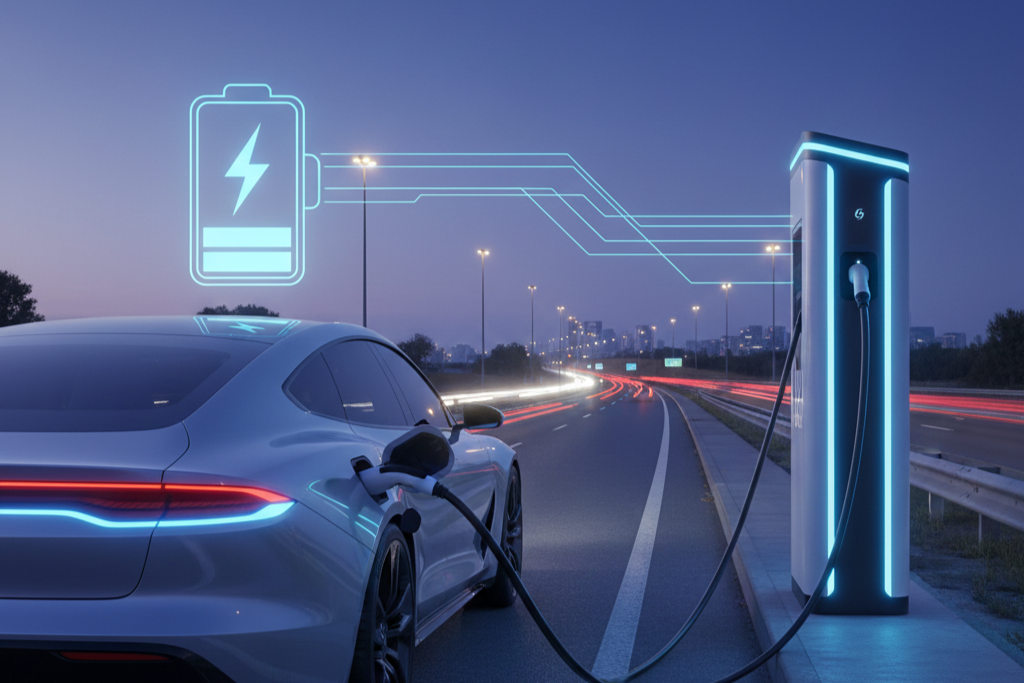
Electric vehicle (EV) innovation is accelerating worldwide as automakers race to develop next-generation batteries that offer faster charging, longer range, and improved safety. The latest breakthroughs are reshaping the competitive landscape of the global EV industry.
Companies in the United States, China, South Korea, and Europe are investing heavily in solid-state battery technology. These batteries promise higher energy density and reduced fire risk compared to traditional lithium-ion cells. Several prototypes have demonstrated impressive performance in early testing.
Automakers are also expanding charging infrastructure. Ultra-fast charging stations capable of powering vehicles in under 10 minutes are being rolled out across major highways in Europe and Asia. Wireless charging pads for public parking areas are also being tested.
China remains the world’s largest EV market, supported by strong government incentives and a rapidly growing network of battery-swapping stations. Local manufacturers are competing aggressively with global brands by offering advanced features at competitive prices.
Europe is focusing on green manufacturing, aiming to reduce carbon emissions across the EV supply chain. The EU is supporting large-scale battery plants and recycling initiatives to reduce dependence on imported materials.
In the United States, new tax incentives are boosting consumer adoption. Automakers are releasing electric trucks and SUVs tailored for the North American market, expanding EV appeal beyond urban commuters.
Despite progress, challenges remain. Battery material shortages, high production costs, and limited charging access in developing countries could slow global adoption. However, experts say technological advancements will continue driving the EV industry forward.