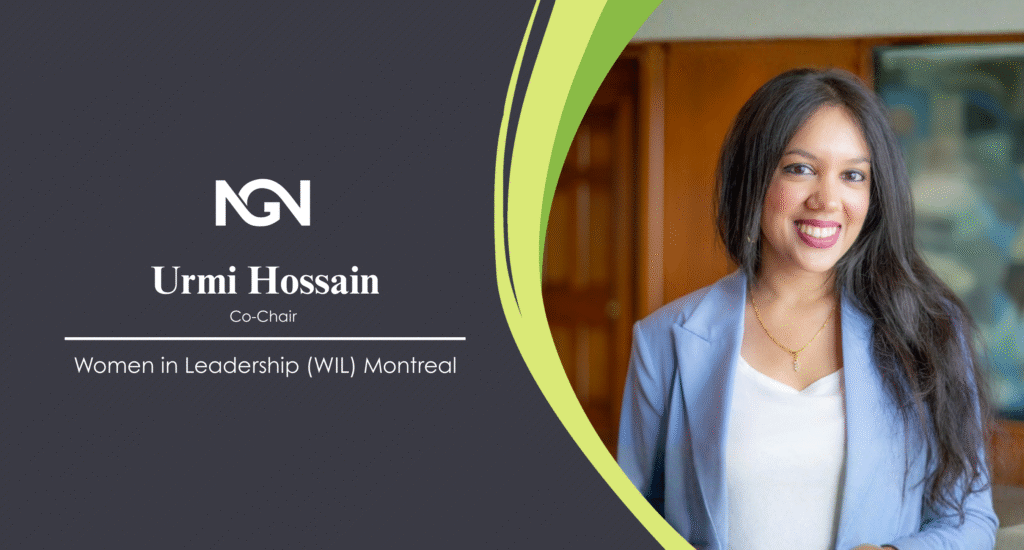
Her journey into leadership did not begin with ambition for authority. It began with observation—watching patterns repeat across classrooms, workplaces, and cultures—and with a decision that silence was no longer an option.
Early Awareness and the Seeds of Advocacy
Urmi’s path toward women’s leadership advocacy was shaped long before she stepped into formal roles. Growing up in a culture where women’s opinions were often overlooked and compliance was expected, she became aware early on of how deeply social conditioning can influence confidence and opportunity.
That awareness followed her into academic life. While studying finance, she noticed the imbalance in representation—classrooms dominated by men, with fewer women speaking up or being encouraged to lead. The pattern persisted in professional environments as well: women working harder to prove themselves, earning less, and rarely occupying decision-making positions.
What struck Urmi most was not that these patterns existed in one place, but that they appeared everywhere—across industries, continents, and organizational structures.
“I saw the same story repeating itself,” she reflects. “And at some point, you realize that you either accept the system or you take responsibility for changing it.”
That realization marked a turning point. Advocacy was no longer an abstract concept; it became a personal obligation.
Women in Leadership: From Mission to Movement
Urmi’s involvement with Women in Leadership (WIL) evolved organically, mirroring her belief in growth through service. Founded more than 20 years ago in Canada, WIL operates through independent city chapters unified by a shared mission: to close the leadership gap between men and women by equipping women with the tools, confidence, and community needed to advance.
Her journey within the organization began as a mentor. From there, she stepped into the role of Social Media Coordinator, and eventually into her current position as Co-Chair of the Montreal Chapter. Each role deepened her understanding of the organization’s impact and the responsibility that comes with stewardship.
Today, WIL Montreal focuses on supporting women across corporate, entrepreneurial, and transitional stages of their careers. Through mentorship programs, expert-led webinars, leadership development initiatives, and community-driven events, the organization addresses both skill-building and belonging.
Leadership is not about holding a title; it’s about taking responsibility for creating change where silence once existed
For Urmi, WIL is not simply an institution—it is a living ecosystem where women grow together.
“When women are supported, they don’t just succeed individually,” she explains. “They lift others with them. That’s how communities transform.”
Confronting the Invisible Barriers
Advocacy, Urmi believes, requires honesty—especially about challenges that are less visible. One of the most persistent obstacles she encounters in her work is imposter syndrome, a phenomenon she speaks about openly.
Women, she notes, are often conditioned to believe they must meet every qualification before stepping forward, while their male counterparts apply with confidence even when they do not. This internalized doubt leads many capable women to opt out of leadership opportunities before they even begin.
Urmi does not position herself as immune to these struggles. Instead, she acknowledges them as part of the collective experience.
“Second-guessing is something many of us carry,” she says. “The challenge is learning to recognize it—and choosing not to let it define us.”
Through WIL, these conversations are brought into the open. Awareness becomes the first step toward change, and community becomes the structure that sustains it.
A Leadership Philosophy Rooted in Impact
Urmi’s leadership philosophy is built on three interconnected pillars: Impact, Influence, and Inspiration.
She observes that women often lead differently—not from a desire for status, but from a commitment to sustainability and purpose. Many women leaders prioritize long-term outcomes, empathy, and collective well-being over short-term recognition.
This approach, she believes, reflects a broader shift in how leadership itself is evolving. Authority is becoming less about hierarchy and more about action. Influence is no longer measured by titles, but by trust.
Women, she notes, tend to be achievement-driven rather than power-driven, leading with resilience, consistency, and authenticity. In doing so, they create environments where others feel safe to grow.
When women are supported, their success is never individual—it becomes collective and transforms entire communities
Community as the Cornerstone
One of the most consistent themes in Urmi’s work is community. Across WIL Montreal and national initiatives, she sees a growing desire among women not only for professional advancement, but for meaningful connection.
Women seek spaces where they can exchange ideas, build sisterhood, and support one another beyond transactional networking. They want environments where collaboration replaces competition.
Equally important is the emphasis on self-care and well-being. Many women carry the weight of professional ambition alongside societal expectations, caregiving roles, and emotional labor. Creating spaces where women can prioritize themselves—through movement, reflection, or simply shared presence—has become a critical part of WIL’s programming.
At both local and national levels, wellness initiatives now complement leadership development, reinforcing the idea that sustainable leadership begins with personal well-being.
Authenticity, Learning, and Service
Urmi remains grounded through a set of personal values that guide her work: authenticity, continuous learning, and service.
She believes leadership loses its meaning when it requires people to wear masks. Authenticity, in her view, is not situational—it is foundational. Whether in professional or community settings, she advocates for showing up fully and honestly.
Learning, too, plays a central role. In a world defined by constant change, adaptability becomes a survival skill. Urmi treats learning not as a phase, but as a lifelong discipline—one that allows leaders to stay relevant, empathetic, and effective.
Service completes the triad. Through volunteering, mentoring, and community engagement, she reinforces the belief that leadership is measured by what one gives, not what one accumulates.
Building Trust Through Human Connection
For Urmi, meaningful leadership begins with human connection. Before collaboration can exist, there must be trust—built through transparency, sincerity, and genuine care.
She is particularly intentional about serving communities where shared cultural experiences foster deeper understanding. As a woman of colour, she recognizes the value of representation and the comfort that comes from being truly seen.
“Sometimes people need someone who understands their experience without explanation,” she says.
This awareness shapes how she builds relationships—always seeking alignment, mutual respect, and a sense of shared purpose.
The Future of Women’s Leadership
Looking ahead, Urmi sees women’s leadership being shaped by three defining forces: representation, diversity, and flexibility.
Women are no longer waiting for invitations to leadership tables—they are building their own. They are creating spaces where stories are shared, voices are amplified, and opportunities are multiplied.
Leadership, she believes, will continue shifting away from rigid hierarchies toward impact-driven action. Mentorship, allyship, and partnerships will play an increasingly important role as women uplift one another across industries and generations.
Imposter syndrome thrives in isolation; confidence grows when women are surrounded by community, mentorship, and shared experience
Milestones and Momentum
One of Urmi’s proudest achievements is her role in reviving the WIL Montreal Chapter, which had been dormant for a period. Alongside a dedicated team of four women, she is leading efforts to rebuild and re-energize the community.
A major milestone is planned for March 8, aligned with International Women’s Day, marking the official relaunch of the chapter. The event will feature a panel of women entrepreneurs and corporate professionals, followed by a networking session designed to foster learning and connection.
For Urmi, the logistics are secondary to the purpose. The true success lies in creating a space where women feel welcomed, supported, and inspired.
The Role of Mentorship
Mentorship has been a defining force in Urmi’s own journey. Some of her earliest mentors were friends—people she affectionately refers to as “friendtors.” Their encouragement and honesty provided guidance at critical moments.
She also found inspiration in female managers early in her career—leaders who embodied confidence and clarity. Later, formal mentorship programs introduced her to perspectives she might not have sought out on her own, including guidance from mentors outside her immediate circles.
These experiences shaped how she approaches mentoring today: with openness, curiosity, and respect for the unexpected paths that growth can take.
Guidance for the Next Generation
When asked what advice she offers to young women seeking influence and confidence, Urmi emphasizes three practices:
- Build relationships intentionally—seek allies, mentors, and partners who challenge and support you.
- Commit to lifelong learning—leadership is strengthened through knowledge and reflection.
- Stay visible and engaged—opportunities grow through presence and consistency.
She reminds emerging leaders that education does not end in classrooms; it continues in conversations, boardrooms, and lived experiences.
Redefining Success
Urmi’s definition of success has evolved over time. Once focused on grades, titles, and milestones, she now views success as something more internal and enduring.
Success, for her, is measured by impact, fulfillment, and peace. It is found in the communities she helps build, the women she supports, and the sense of alignment between her values and actions.
Milestones still matter—but they are no longer the destination. They are markers along a larger journey of service.
A Quiet, Enduring Influence
Urmi Hossain’s leadership does not rely on spectacle. It is expressed through consistency, compassion, and commitment. Through her work with Women in Leadership Montreal, she continues to shape spaces where women feel empowered not only to lead, but to lead together.
In an era redefining what influence looks like, her story stands as a reminder that the most lasting change often begins quietly—with awareness, courage, and the decision to act.
And in that decision, communities are transformed.